Bumper Offer - Urjas oil Just @ Rs. 1
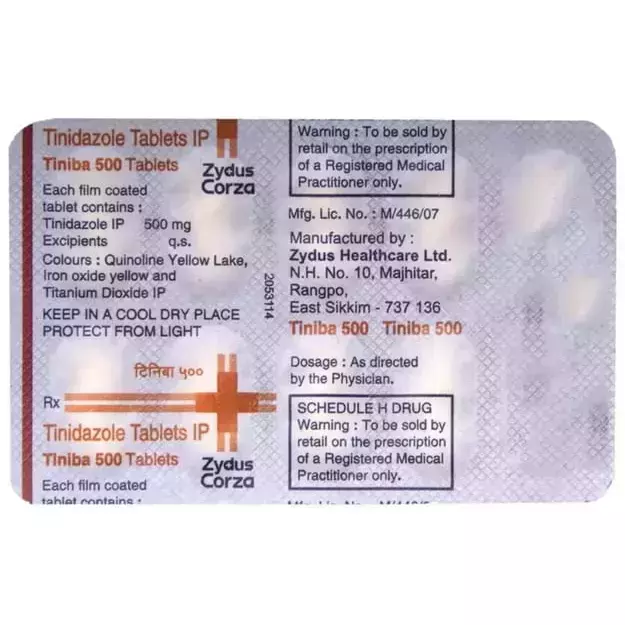
Tiniba, a prescription drug, is manufactured in various forms such as Tablet, Infusion. It is typically used for the treatment of Amebiasis. Tiniba also has some secondary and off-label uses. These are listed below.
The right dosage of Tiniba depends on the age, gender, and medical history of the patient. Besides the medical condition it is advised for, the route of administration also plays an important role in determining the correct drug dosage. Detailed information has been provided in the dosage section.
Besides the aforementioned side effects, there are other adverse effects of Tiniba as well, which are listed below. Usually, these side effects of Tiniba go away soon, and do not persist beyond the duration of the treatment. Consult your doctor if these side effects become worse or stay for a longer duration.
It is also important to note that Tiniba has a Moderate effect for pregnant women and Moderate effect on lactating mothers. In addition, Tiniba's effects on the liver, heart and kidney are discussed below in the Tiniba related warnings section.
Tiniba is contraindicated in people with pre-existing medical conditions like Peripheral Neuropathy as it can result in adverse effects. Other conditions have been mentioned below in the Tiniba contraindications section.
Drug reaction of Tiniba with other medicines has been reported. Refer to the list below for further details.
In addition to the above precautions for Tiniba, it is important to know that it is not safe while driving, and is not habit-forming.
Tiniba is used to treat the following -
Main Benefits
Other Benefits
This is the usual dosage recommended in most common treatment cases. Please remember that every patient and their case is different, so the dosage can be different based on the disease, route of administration, patient's age and medical history.
Find the right dosage based on disease and age
| Age Group | Dosage |
| Adult |
|
| Adult(Female) |
|
| Geriatric |
|
| 13 - 18 years (Adolescent) |
|
| 2 - 12 years (Child) |
|
Is the use of Tiniba safe for pregnant women?
Tiniba may have some side effects during pregnancy. Pregnant women should discontinue the use of Tiniba, and talk to their doctor, if they notice any discomfort.
Is the use of Tiniba safe during breastfeeding?
Women who are breastfeeding can experience some moderate side effects of Tiniba. Immediately discontinue Tiniba if you observe any side effects. Contact your doctor, and restart using it only if your doctor considers it safe for you.
What is the effect of Tiniba on the Kidneys?
Tiniba rarely harms the kidneys.
What is the effect of Tiniba on the Liver?
Side effects of Tiniba rarely affect the liver.
What is the effect of Tiniba on the Heart?
Tiniba is not harmful for the heart.
Tiniba should not be taken with following medicines due to severe side effects it may cause to patients -
Severe
Mild
If you are suffering from any of the following diseases, you should not take Tiniba unless your doctor advises you to do so -
Is this Tiniba habit forming or addictive?
Tiniba does not cause addiction.
Is it safe to drive or operate heavy machinery when consuming?
You may feel sleepy or tired after taking Tiniba. So it is best to avoid driving.
Is it safe?
Yes, Tiniba is safe but you must consult your doctor before taking it.
Is it able to treat mental disorders?
No, Tiniba is not used to treat mental disorders.
Interaction between Food and Tiniba
You can take Tiniba with food.
Interaction between Alcohol and Tiniba
Consuming Tiniba with alcohol can have many serious effects on your body.
This medicine data has been created by -
References
US Food and Drug Administration (FDA) [Internet]. Maryland. USA; Package leaflet information for the user; Tindamax® (tinidazole)
KD Tripathi. [link]. Seventh Edition. New Delhi, India: Jaypee Brothers Medical Publishers; 2013: Page No 839
US Food and Drug Administration (FDA) [Internet]. Maryland. USA; Package leaflet information for the user; Tindamax® (tinidazole)
KD Tripathi. [link]. Seventh Edition. New Delhi, India: Jaypee Brothers Medical Publishers; 2013: Page No 839