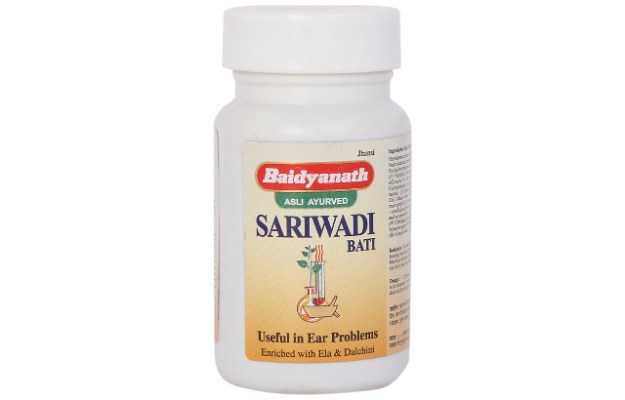
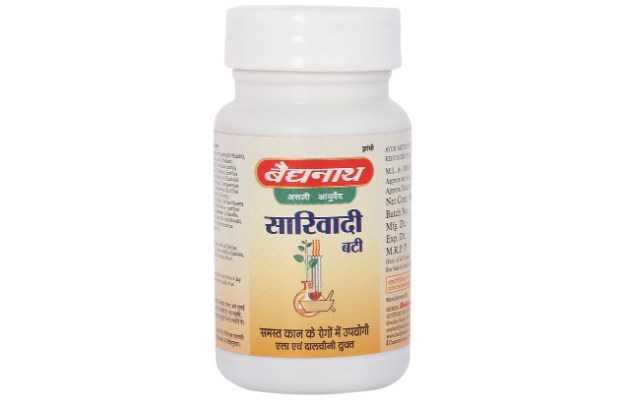
Baidyanath Sariwadi Bati

 8989 people have bought this recently

Select the variant of Baidyanath Sariwadi Bati

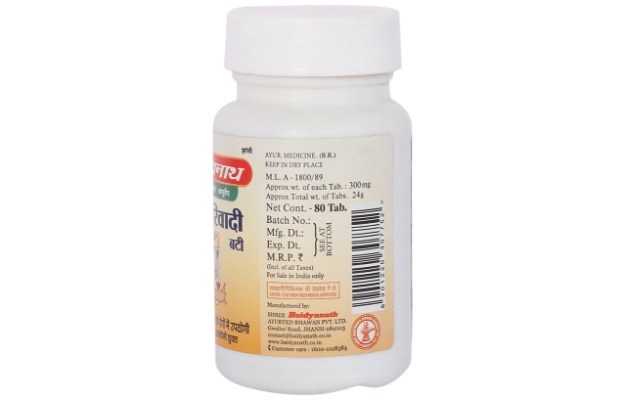
Baidyanath Sariwadi Bati (80) 80 बटी (गोलियां) 1 बोतल ₹ 320 ₹377 15% OFF Save: ₹57
Baidyanath Sariwadi Bati (30) 30 बटी (गोलियां) 1 बोतल ₹ 73

  • Seller: EAGLE EXIM INC
    • Country of Origin: India

    Baidyanath Sariwadi Bati Information

    Baidyanath Sarivadi Bati is a classical Ayurvedic medicine formulated to support auditory and neurological health. Traditionally used for ear-related issues, this herbal remedy combines multiple potent ingredients to help relieve symptoms like hearing difficulties, tinnitus (ringing in the ears), and even memory-related concerns. Its formulation is based on ancient Ayurvedic texts and has been refined over time to cater to modern wellness needs. This combo pack provides a convenient and cost-effective option for those undergoing long-term use or treatment under Ayurvedic supervision.

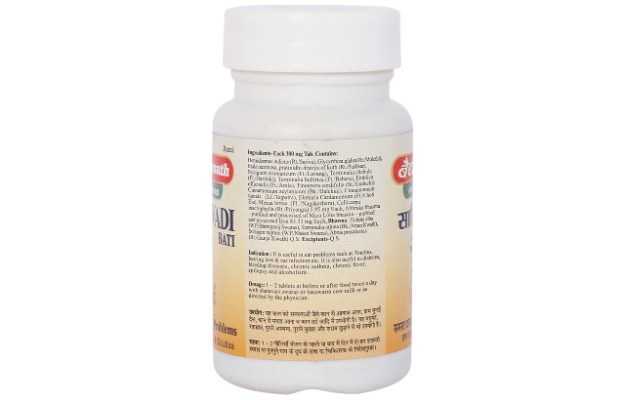
    Ingredients of Baidyanath Sariwadi Bati

    Ananthamoola
    • An agent or medicine used to prevent or treat diabetes by managing blood sugar levels.
    • Agents used for the treatment of fevers.
    • Substances which aid blood formation and help in the treatment of anaemia.
    Kushta
    Nagkesar
    • Drugs that diminish pain without inducing unconsciousness
    • Set of drugs that are used to relieve asthma symptoms.
    • An agent or medicine used to prevent or treat diabetes by managing blood sugar levels.
    • Substances used to reduce the symptoms of fever, pain and swelling in an inflammatory response.
    • A substance or drug which is used to bring down body temperature in case of fever.
    • A medicine or an agent which destroyes or suppresses the growth of bacteria.
    Cinnamon
    • Substances used to reduce the symptoms of fever, pain and swelling in an inflammatory response.
    • Agents, which help to reduce oxidative stress, by scavenging free radicals
    • Agents effective against localised microbial growth
    • Agents that are effective in increasing libido.
    • Agents that inhibit microbial growth or destroys microbes.
    Mahua
    • Drugs which are used for the control of pain and do not lead to loss of consciousness
    • Substances that help manage diabetes by keeping a check on blood sugar levels.
    • Agents or substances that are used to suppress inflammation (swelling).
    • Agents used for the treatment of fevers.
    • Substances that scavange the singlet oxygen molecules in the body.
    • A substance or drug which is beneficial in protecting the normal functioning of liver.
    Water lily
    • An agent or medicine used to prevent or treat diabetes by managing blood sugar levels.
    • Drugs which aid in swelling reduction following an injury
    • Agents, which help to reduce oxidative stress, by scavenging free radicals
    • A medicine or an agent which destroyes or suppresses the growth of bacteria.
    Cardamom
    • Substances that help lower body temperature and treat fever.
    • Agents that inhibit microbial growth or destroys microbes.
    Triphala
    • Bioactive substances that maintain homeostasis and control body functions in situations of stress
    • Drugs that diminish pain without inducing unconsciousness
    • Drugs used to reduce swelling after an injury
    • Drugs which are helpful in lowering down of body temperature during a fever
    • Agents that reduce oxidative stress and revert oxidative damage in the body cells.
    • Agents which cause a reduction in blood glucose levels.
    • Drug used for the treatment of high blood pressure.
    Abhrak bhasma
    • Drugs useful in the management of blood sugar levels
    • Agents that improve heart function and cardiac output.
    • Drugs that improve liver function and protect it from infections
    • Substances that provide nourishment to the body.
    • Substances which aid blood formation and help in the treatment of anaemia.
    Lauh bhasma
    • Substances that induces the formation of haemoglobin and RBCs and are used for the treatment of anaemia.
    • Drugs that kill or arrest the growth of bacteria.
    Makoy (Kakamachi)
    • Agents that reduce inflammation or swelling caused due to an injury or infection.
    • Agents which help in reducing free radical activity and preventing oxidative stress and damage
    Priyangu
    • Drugs useful in the management of blood sugar levels
    • A substance or drug which is used to bring down body temperature in case of fever.
    • A substance that is used to treat muscle spasm and muscle pain of voluntary and involuntary muscles.

    Baidyanath Sariwadi Bati Benefits

    Baidyanath Sariwadi Bati is used to treat the following -

    Main Benefits

    Other Benefits


    Baidyanath Sariwadi Bati Dosage

    This is the usual dosage recommended in most common treatment cases. Please remember that every patient and their case is different, so the dosage can be different based on the disease, route of administration, patient's age and medical history.

    Age Group Dosage
    Adult
    • General: Use prescribed amount
    • Before or After Meal: Either
    • Single Maximum Dose: 2 Tablet
    • Preferred way of taking: Milk
    • Dosage Form: Tablet
    • Dosage Route: Oral
    • Frequency: BID (twice daily)
    • Course Duration: 3 months
    Geriatric
    • General: Use prescribed amount
    • Before or After Meal: Either
    • Single Maximum Dose: 2 Tablet
    • Preferred way of taking: Milk
    • Dosage Form: Tablet
    • Dosage Route: Oral
    • Frequency: BID (twice daily)
    • Course Duration: 3 months

    Baidyanath Sariwadi Bati Side Effects

    No side effects of Baidyanath Sariwadi Bati have been reported in the medical literature. However, you should always consult your doctor before using Baidyanath Sariwadi Bati.


    How to Take Baidyanath Sariwadi Bati

    You can take Baidyanath Sariwadi Bati with following:

    • Can I take Baidyanath Sariwadi Bati with Milk?
      Yes, it is okay to take Baidyanath Sariwadi Bati with milk.

    • Can I take Baidyanath Sariwadi Bati with LukeWarm Water?
      Lukewarm water is absolutely safe to accompany Baidyanath Sariwadi Bati.


    General precautions for Baidyanath Sariwadi Bati


    This medicine data has been created by -

    Dr. Braj Bhushan Ojha

    BAMS, Gastroenterology, Dermatology, Psychiatry, Ayurveda, Sexology, Diabetology
    10 Years of Experience


    References

    Ministry of Health and Family Welfare. Department of Ayush: Government of India. [link]. Volume 1. Ghaziabad, India: Pharmacopoeia Commission for Indian Medicine & Homoeopathy; 1986: Page No - 105 - 106

    Ministry of Health and Family Welfare. Department of Ayush: Government of India. [link]. Volume 2. Ghaziabad, India: Pharmacopoeia Commission for Indian Medicine & Homoeopathy; 1999: Page No - 125 - 126

    Ministry of Health and Family Welfare. Department of Ayush: Government of India. [link]. Volume 1. Ghaziabad, India: Pharmacopoeia Commission for Indian Medicine & Homoeopathy; 1986: Page No - 151 - 152

    Ministry of Health and Family Welfare. Department of Ayush: Government of India. [link]. Volume 2. Ghaziabad, India: Pharmacopoeia Commission for Indian Medicine & Homoeopathy; 1999 : Page No 109 - 110

    Ministry of Health and Family Welfare. Department of Ayush: Government of India. [link]. Volume 1. Ghaziabad, India: Pharmacopoeia Commission for Indian Medicine & Homoeopathy; 1986: Page No 36-37

    Ministry of Health and Family Welfare. Department of Ayush: Government of India. [link]. Volume- IV. Ghaziabad, India: Pharmacopoeia Commission for Indian Medicine & Homoeopathy; 2004: Page No 54-56

    Ministry of Health and Family Welfare. Department of Ayush: Government of India. [link]. Volume 2. Ghaziabad, India: Pharmacopoeia Commission for Indian Medicine & Homoeopathy; 1999: Page No 70-73

    Ministry of Health and Family Welfare. Department of Ayush: Government of India. [link]. Volume 2. Ghaziabad, India: Pharmacopoeia Commission for Indian Medicine & Homoeopathy; 1999: Page No 151-152

    Ministry of Health and Family Welfare. Department of Ayush: Government of India. [link]. Volume 4. Ghaziabad, India: Pharmacopoeia Commission for Indian Medicine & Homoeopathy; 2004: Page No 111-112