

 Download App





What is Endoscopy?
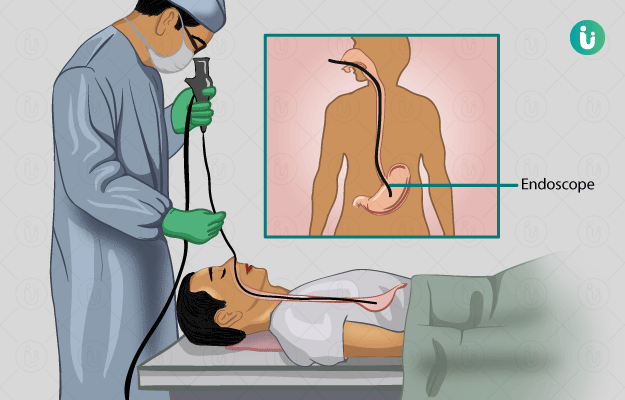
Endoscopy is a procedure that doctors use to view internal body parts using a long tube-like instrument with an attached camera known as an endoscope or a scope. Endoscopy can be used to examine organs such as stomach, oesophagus and small intestine and helps detect the cause of problems in these organs. It is also beneficial in some surgical procedures, e.g., removing polyps from colon. Following are some commonly used endoscopy procedures and the parts of the body viewed:
- Upper endoscopy: Stomach, oesophagus and small intestine
- Cystoscopy: Urinary bladder
- Laryngoscopy: Larynx or the voice box
- Colonoscopy: Large intestine and the entire length of the colon
- Bronchoscopy: Bronchi of the lungs and the windpipe
- Colposcopy: Cervix and vagina
- Laparoscopy: Female reproductive organs like the uterus and ovaries, liver, organs of the gastrointestinal tract
- Arthroscopy: Joints
- Neuroendoscopy: Areas of the brain
Virtual and capsule endoscopy are the most recent advances in endoscopy.
- Why is Endoscopy performed?
- How do you prepare for Endoscopy?
- How is Endoscopy performed?
- What do Endoscopy results mean?

Why is Endoscopy performed?
Endoscopy is recommended for the following reasons:
- To prevent and screen cancer, for example, a colonoscopy helps detect rectal cancer
- To find the underlying causes of various symptoms or to diagnose a disease
- For treatment procedures such as:
- Administering medications
- Microwave ablation: using heat to destroy cancer cells
- Laser therapy: using powerful light beams to kill cancer cells
- Photodynamic treatment: using laser beams to destroy a tumour after injecting it with a light-sensitive substance
- Laparoscopy: a surgical procedure to remove cancer or tumour
- Removing blockages
- To widen a narrowed oesophagus










 Share & Earn

 Embed
Embed
 Link
Link
 Whatsapp
 Facebook
 X
Share & Earn
Embed
Link
Whatsapp
Facebook
X
X
Share & Earn
Embed
Link
Whatsapp
Facebook
X
How do you prepare for Endoscopy?
- Individuals might be asked to avoid consuming food and drinks for many hours before the test as the stomach should be empty during the procedure.
- They should stop taking blood-thinning medications like clopidogrel and warfarin a few days before undergoing the procedure to prevent excessive bleeding during.
- Those with diabetes should not take their insulin prescriptions before undergoing the test unless they are asked to.
- Individuals should inform the technician if they have been diagnosed with diabetes or if they have an allergic reaction to any medications.
- Specific endoscopic procedures might require individuals to use enemas or laxatives to eliminate stools from bowels. Individuals will be asked to sign a consent form prior to the endoscopy
How is Endoscopy performed?
Local anaesthetics or sedatives might be given to individuals before the procedure based on the body part to be examined. The endoscope is then inserted into the body via the throat, urethra or anus depending on the body part to be inspected. For laparoscopy, the tube is inserted via a small cut on the skin. A small tissue from the area might be taken to examine under the microscope. Endoscopy can last from about 15 minutes to an hour. Individuals might be advised to rest for approximately an hour after the procedure or until the sedative or anaesthetic effect wears off.
Endoscopy is typically a safe procedure with a low risk of serious complications. Possible complications include:
- Infection at the insertion point of endoscope
- Injury to an organ or excessive bleeding that may require surgery
- Shortness of breath
- Discharge of pus or other fluids
- Chest pain
- Persistent or severe abdominal pain
- High fever
- Dark- or black-coloured stools
- Vomiting of blood
A doctor should be consulted if any of these symptoms last for an extended period.
What do Endoscopy results mean?
Normal results:
A typical endoscopy result of a healthy person indicates no changes in body structure and organs examined.
Abnormal results:
Abnormal changes in images like inflammation, swelling, ulcers or tumour might indicate the presence of the following health problems:
- Bleeding ulcers
- Strictures
- Cancer
- Urinary tract infections
- Stone in the urinary tract
- Irregular bowel movements
Disclaimer: All results must be clinically correlated with the patient’s complaints to make a complete and accurate diagnosis. This information is purely from an educational point of view and is in no way a substitute for medical advice by a qualified doctor.

References
- Medline plus [internet]: US National Library of Medicine; Endoscopy
- Minneapolis VA Health Care System: VA Medical Center Minneapolis, Minnesota; Endoscopy
- American Cancer Society [internet]. Atlanta (GA), USA; Endoscopy
- American Society of Clinical Oncology [internet]; What is an endoscope?
- University of Utah Health [internet]; WHY SHOULD YOU GET AN ENDOSCOPY?
- National Health Service [internet]. UK; Endoscopy
- American Gastroenterological Association [internet]. Bethesda (MA), US; Upper GI endoscopy
- American Cancer Society [internet]. Atlanta (GA), USA: Tests for Stomach Cancer
- National Institute of Diabetes and Digestive and Kidney Diseases [internet]: US Department of Health and Human Services; Cystoscopy & Ureteroscopy
- Surgical patient education: American College of Surgeons [internet]; Colonoscopy