

 Download App





What is an Immunoglobulin (Ig A, G, M) test?
Immunoglobulins are proteins that our body produces in response to the presence of antigens - substances that our body considers harmful or foreign. These can be toxins, bacteria, viruses or cancer cells.
Specific immunoglobulins are made against specific antigens - this means an antibody will only attack the specific antigen it is made against. For example, tuberculosis immunoglobulins will attack tuberculosis bacteria only and would not work against any other bacteria.
Our immune system also has a memory. Once it has been exposed to a particular antigen, it remembers the causative antigen, so the next time the same antigen enters the body, antibodies can be produced quickly. However, sometimes the body mistakenly produces antibodies against healthy organs and tissue, leading to autoimmune diseases. Such antibodies are called autoantibodies.
An immunoglobulin test or the total immunoglobulin test determines the level of antibodies or immunoglobulins - IgA, IgG and IgM - in your blood to check for current or past infections, diseases or autoimmune conditions.
The three types of immunoglobulins that can be detected with this test are as follows:
IgM: It is the largest antibody, and is the first to be produced in response to an antigen. IgM contributes about 5% to 10% of the total antibodies. It is found in both blood and lymph.
IgG: IgG is the smallest antibody but is the most common. Contributing to about 75% to 80% of the total antibodies, these antibodies are essential in fighting against bacterial or viral infections. IgG also stays for the longest in the bloodstream after infection and makes the memory of the immune system. It is these antibodies that help our body react quickly in cases of re-infection.
Additionally, IgG is the only antibody that passes through the placenta, and hence, a mother’s IgG antibodies can protect the foetus during pregnancy.
IgA: IgA contributes to about 15% of the total antibodies in the body. It is found in saliva, tears, sinus, lungs, breast milk and gastric fluids of the stomach and intestine. An infant does not have IgA in the blood until six months of age, till then he/she will get IgA antibodies from the mother’s milk only.
- Why is an Immunoglobulin (Ig A, G, M) test performed?
- How do you prepare for an Immunoglobulin (Ig A, G, M) test?
- How is the Immunoglobulin (Ig A, G, M) test performed?
- Immunoglobulin (Ig A, G, M) test results and normal range

Why is an Immunoglobulin (Ig A, G, M) test performed?
Your healthcare practitioner may order an immunoglobulin test in the following conditions:
- Bacterial infection or viral infection
- Infections in the newborn
- Certain type of cancer, for example, multiple myeloma
- Autoimmune disorder such as rheumatoid arthritis or systemic lupus
- Treatment for cancer affecting the bone marrow
- Allergies
- Recurring infections due to low levels of immunoglobulins
- Treatment of Helicobacter pylori infection
A doctor may also order this test if he observes the following symptoms related to low immunoglobulin levels:
- Family history of immune deficiency
- Unusual or frequent viral or bacterial infections
- Lung infections
- Sinus infections
- Chronic diarrhoea

 Share & Earn

 Embed
Embed
 Link
Link
 Whatsapp
 Facebook
 X
Share & Earn
Embed
Link
Whatsapp
Facebook
X
X
Share & Earn
Embed
Link
Whatsapp
Facebook
X
How do you prepare for an Immunoglobulin (Ig A, G, M) test?
There is no need for any special preparation before this test. Fasting is not required either. If you are taking any prescribed, non-prescribed, illicit medicines or vitamins and supplements, tell your doctor before the test. Also, inform him/her if you have received any vaccine in the past six months.
Avoid taking hydralazine, phenytoin, procainamide, isoniazid or tetanus vaccine before the test because they can increase the immunoglobulin levels. However, do not skip any medication without asking your doctor.
How is the Immunoglobulin (Ig A, G, M) test performed?
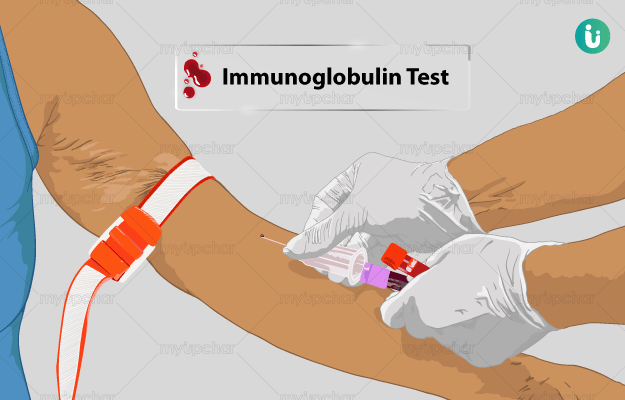
It is a simple blood test for which a doctor or lab-technician will withdraw a small amount of blood from a vein in your arm.
The test takes no more than three minutes. After the test, you may experience mild pain or bruises at the site of the injection; however, all of these symptoms will fade away soon.
 Share & Earn
Embed
Link
Whatsapp
Facebook
X
Share & Earn
Embed
Link
Whatsapp
Facebook
X
Share & Earn
Embed
Link
Whatsapp
Facebook
X
Share & Earn
Embed
Link
Whatsapp
Facebook
X
Immunoglobulin (Ig A, G, M) test results and normal range
Normal results:
The normal results for immunoglobulins IgA, IgG and IgM expressed in milligram/decilitres (mg/dL) are as follows:
| Type of immunoglobulin | Children | Adults |
| IgG | 250-1600 | 565-1765 |
| IgA | 1-350 | 85-385 |
| IgM | 20-200 | 55-375 |
| IgD and IgE | Minimal | |
Normal results indicate that you don’t have an infection or disease.
If this test is performed to check the success of a treatment, normal results may indicate a favourable response.
Abnormal results
Increased values:
Elevated levels for each class of immunoglobulin indicate the following:
IgG:
- Tuberculosis
- Wegener granulomatosis
- Sarcoidosis
- Hyper-immunisation reaction
- Chronic liver disease
- Multiple myeloma
- Rheumatoid arthritis
- Sjögren disease
- Systemic lupus erythematosus
- Intrauterine devices
IgA:
- Primary biliary cirrhosis
- Chronic infections
- Inflammatory bowel disease
IgM:
- Waldenström’s macroglobulinaemia
- Hepatitis
- Mononucleosis
- Sarcoidosis
- Systemic lupus erythematosus
- Rheumatoid arthritis
- Acute infections
- Chronic liver disorders
Decreased values:
Each class of immunoglobulin deficiency indicates different conditions. These are as follows:
IgG:
- Leukaemia
- Wiskott–Aldrich syndrome
- Agammaglobulinaemia
- AIDS
- Hypoproteinaemia
- Drug immunosuppression (e.g. steroids, dextran)
- Non-IgG multiple myeloma
IgA:
- Congenital isolated deficiency
- Ataxia or telangiectasia
- Hypoproteinaemia (e.g. nephrotic syndrome or protein-losing enteropathies)
- Immunosuppressive drugs (e.g. steroids, dextran)
IgM:
- IgG or IgA multiple myeloma
- Agammaglobulinaemia
- AIDS
- Hypoproteinaemia
- Drug immunosuppression (e.g. steroids, dextran)
- Leukaemia
Disclaimer: All results must be clinically correlated with the patient’s complaints to make a complete and accurate diagnosis. The above information is provided from a purely educational point of view and is in no way a substitute for medical advice by a qualified doctor.

References
- Michigan Medicine: University of Michigan [internet]; Immunoglobulins
- Stevens, Christine D and Miller, Linda E. Clinical Immunology and Serology: A Laboratory Perspective, 4th Edition: F.A Davis Company, Philadelphia, PA. pp 65-69 and 326-343.
- International Myeloma Foundation [Internet]. California (U.S.A.). [Link]
- Immune deficiency Foundation [internet]. Maryland (U.S). Specific Disease Types
- UW Health [Internet]. Madison (WI): University of Wisconsin Hospitals and Clinics Authority; Health Information: Immunoglobulins
- Hinkle J, Cheever K. Brunner & Suddarth's Handbook of Laboratory and Diagnostic Tests. 2nd Ed: Wolters Kluwer Health, Lippincott Williams & Wilkins; c2014. Quantitative Immunoglobulins: IgA, IgG, and IgM; 442–3 p.
- Australian Family Physician [internet]: The Royal Australian College of General Practitioners, East Melbourne, Victoria; Quantitative serum immunoglobulin tests
- National Heart, Lung, and Blood Institute [Internet]. Bethesda (MD): U.S. Department of Health and Human Services; Blood Tests
- University of Rochester Medical Center [Internet]. Rochester (NY): University of Rochester Medical Center; Quantitative Immunoglobulins
- Pagana KD, Pagana TJ, Pagana TN. Mosby's Diagnostic and Laboratory Test Reference. 14th ed. Pp:536-538.