

 Download App







Placenta plays an important role during pregnancy. This is a type of temporary organ, which is formed only during pregnancy. It is necessary for the nutrition of the baby in the womb. It works to keep the baby healthy and support it in every way. It would not be wrong to say that the placenta is a lifeline for the unborn child.In this article you will know what is placenta and how it works -
(Read more - Baby development in the first month after birth)
- What Is Placenta?
- How Does The Placenta Work?
- When Is The Placenta Formed?
- When Does The Placenta Start Functioning?
- Can The Placenta Move From Its Place?
- Where Is The Placenta Formed?
- What Does The Placenta Look Like?
- Summary

What Is Placenta?
When a woman is pregnant, another organ is formed in her uterus, which is called placenta. In a way, it is a temporary organ, which lasts only till pregnancy. Let us know about placenta in detail -
- When a woman becomes pregnant, that is, the fertilized egg implants itself in the uterus, then 7-10 days later the placenta starts forming.
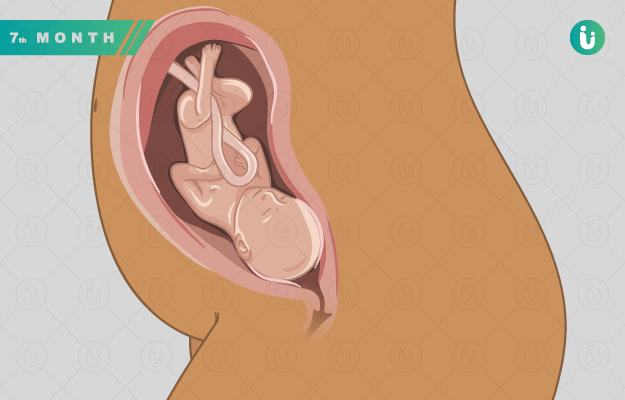
- It is a pancake shaped organ, which develops inside the walls of the uterus. This organ is attached to the top, side, front or back of the uterus.
- In the last stage of pregnancy it becomes 9 inches in diameter.
- This organ connects to the child through the umbilical cord.
- Placenta has two sides. The site on the mother's side is dark red, while the placenta on the baby's side is bright and almost transparent.
(Read more - Bleeding During Pregnancy)


































 Share & Earn

 Embed
Embed
 Link
Link
 Whatsapp
 Facebook
 X
Share & Earn
Embed
Link
Whatsapp
Facebook
X
X
Share & Earn
Embed
Link
Whatsapp
Facebook
X
How Does The Placenta Work?
The placenta works by connecting through the umbilical cord and works to support the baby in every way. Let us know in detail how the placenta works -
- The placenta removes harmful substances and carbon dioxide from the baby.
- The baby in the womb gets the necessary oxygen and nutrients only through the placenta.
- Estrogen, progesterone, human chorionic gonadotropin hormones are produced through the placenta, which prove beneficial in the development of the baby.
- In some cases the placenta may become attached to the lower part of the uterus. When this happens, it is called low lying placenta.
- The placenta carries antibodies from the mother's bloodstream to the baby in the womb, which keeps him safe from all infections until his first vaccination.
- The placenta helps in protecting the child in every way.
(Read more -When do pregnancy symptoms start?)
When Is The Placenta Formed?
Approximately 7 to 10 days after conception, the placenta begins to form after the fertilized egg implants itself in the pregnant woman's uterus. It continues to grow throughout pregnancy to support the fetus. The placenta begins as a few cells and grows to several inches long by the end of pregnancy.
(Also see –False pregnancy (Pseudocyesis))
When Does The Placenta Start Functioning?
The placenta starts producing hormones by the end of the first trimester (12th week of pregnancy). Till this time the corpus luteum itself produces hormones. After the placenta starts the process of producing hormones, the symptoms of nausea and fatigue of most pregnant women start reducing.
(Also see – What to do when periods are late?)







 Share & Earn
Embed
Link
Whatsapp
Facebook
X
Share & Earn
Embed
Link
Whatsapp
Facebook
X
Share & Earn
Embed
Link
Whatsapp
Facebook
X
Share & Earn
Embed
Link
Whatsapp
Facebook
X
Can The Placenta Move From Its Place?
The placenta appears to be moving only because as the pregnancy and fetus grow, the size of the uterus also increases. In the 20th week of pregnancy, doctors check the location of the placenta through ultrasound and try to find out if there is any problem with the placenta. In most cases, by the 32nd week of pregnancy, the placenta moves above or to the side of the uterus.
(Also see – Uterine contractions in pregnancy)
Where Is The Placenta Formed?
Placenta can form anywhere in a woman's uterus. The placenta begins to develop where the fertilized egg implants itself in the lining of the uterus. The main positions of the placenta are as follows –
- Posterior placenta – This placenta grows on the posterior lining of the uterus.
- Anterior placenta – When the placenta grows on the front lining of the uterus, closest to the abdomen.
- Fundal placenta – This placenta grows at the top of the pregnant woman's uterus.
- Lateral placenta – When the placenta attaches itself to the right or left lining of the uterus after fertilization of the egg, the placenta is also formed there. This condition is called lateral placenta.
The placenta may move upward until approximately the 32nd week of pregnancy. As the baby grows, it is normal for the placenta to move up and away from the cervix.
(Also see – After delivery care for the mother)
What Does The Placenta Look Like?
The placenta looks like a disc of raised tissue rich with blood vessels, due to which it appears dark red in color. Most mature placenta tissue is made up of blood vessels. They connect with the baby through the umbilical cord.
(See more – Pregnancy diet)
See Similar Category Medicines Here

Summary
During pregnancy, a temporary organ is formed in the uterus, which is called placenta. It supports the child growing in the womb in every way. Sometimes, if the child or its mother has fever or any other illness, the doctor may ask a pathologist to test the placenta. Even if the baby is born prematurely or is small for its age, the placenta can be tested.
Find Obstetrician and Gynaecologist in cities
- Obstetrician and Gynaecologist in Bangalore
- Obstetrician and Gynaecologist in Mumbai
- Obstetrician and Gynaecologist in Ghaziabad
- Obstetrician and Gynaecologist in Chennai
- Obstetrician and Gynaecologist in Pune
- Obstetrician and Gynaecologist in Delhi
- Obstetrician and Gynaecologist in Hyderabad
- Obstetrician and Gynaecologist in New Delhi
- Obstetrician and Gynaecologist in Gwalior
- Obstetrician and Gynaecologist in Gurgaon

Doctors for Beyond Birth: Understanding the Role and Function of the Placenta

Dr Shernaz Damkevala Dastur
Obstetrics & Gynaecology
25 Years of Experience

Dr. Shravani A
Obstetrics & Gynaecology
3 Years of Experience

Dr Minoo Singh
Obstetrics & Gynaecology
44 Years of Experience